
Multiple point types
Covers the 0X / 1X / 3X / 4X data areas, including coils, discrete inputs and bit fields, plus 16 / 32 / 64-bit integers and single- and double-precision floating point.


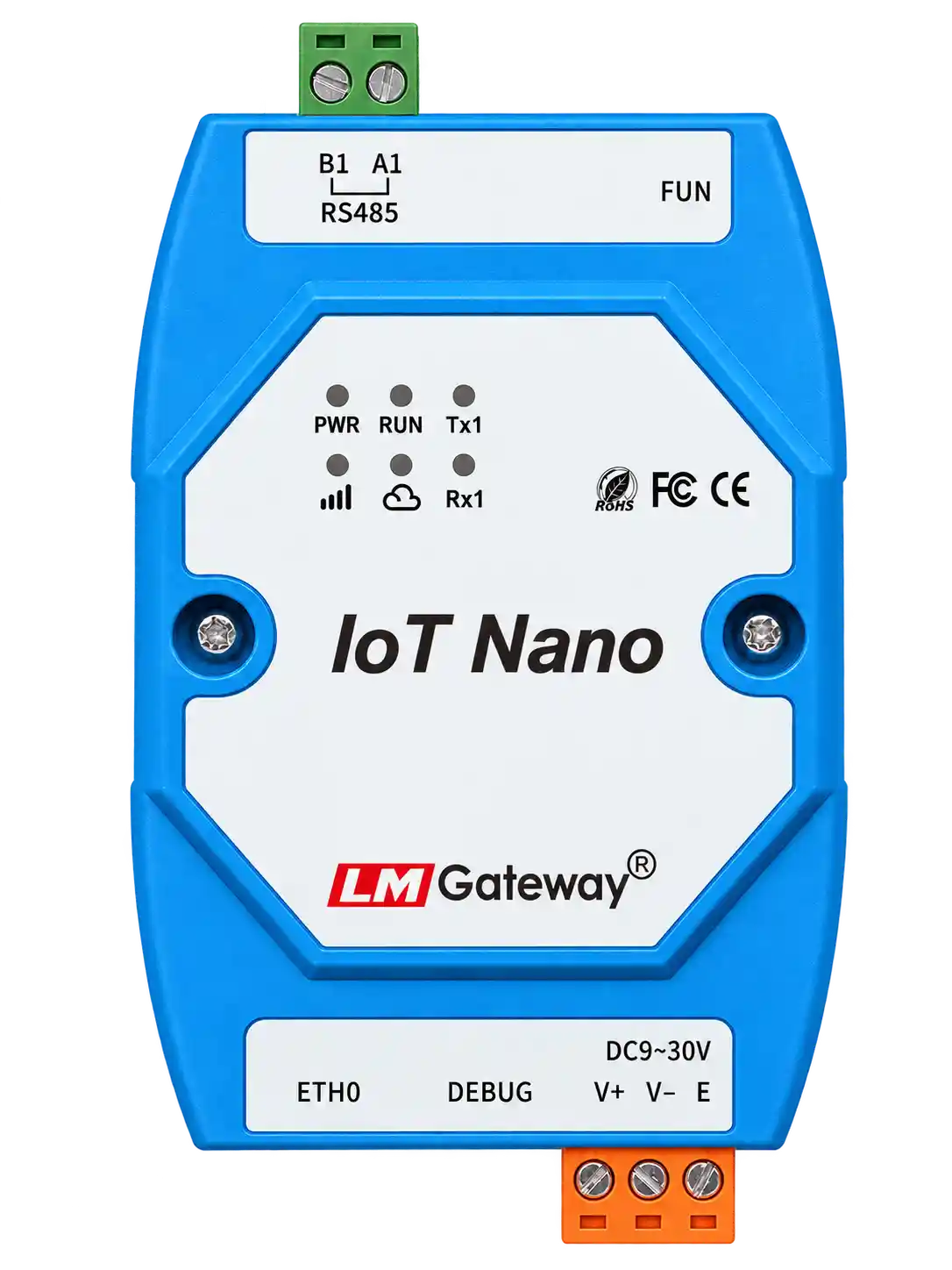
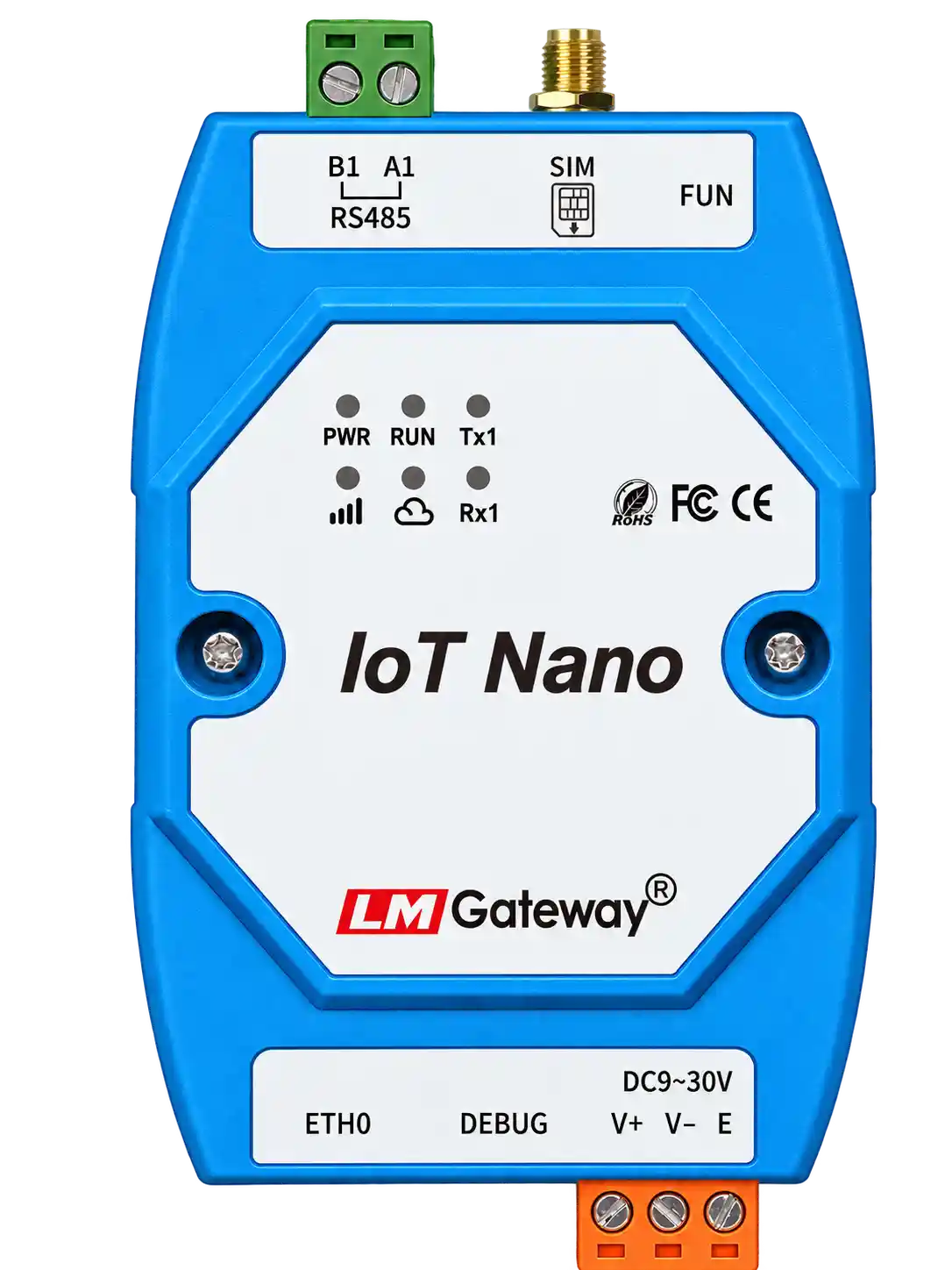
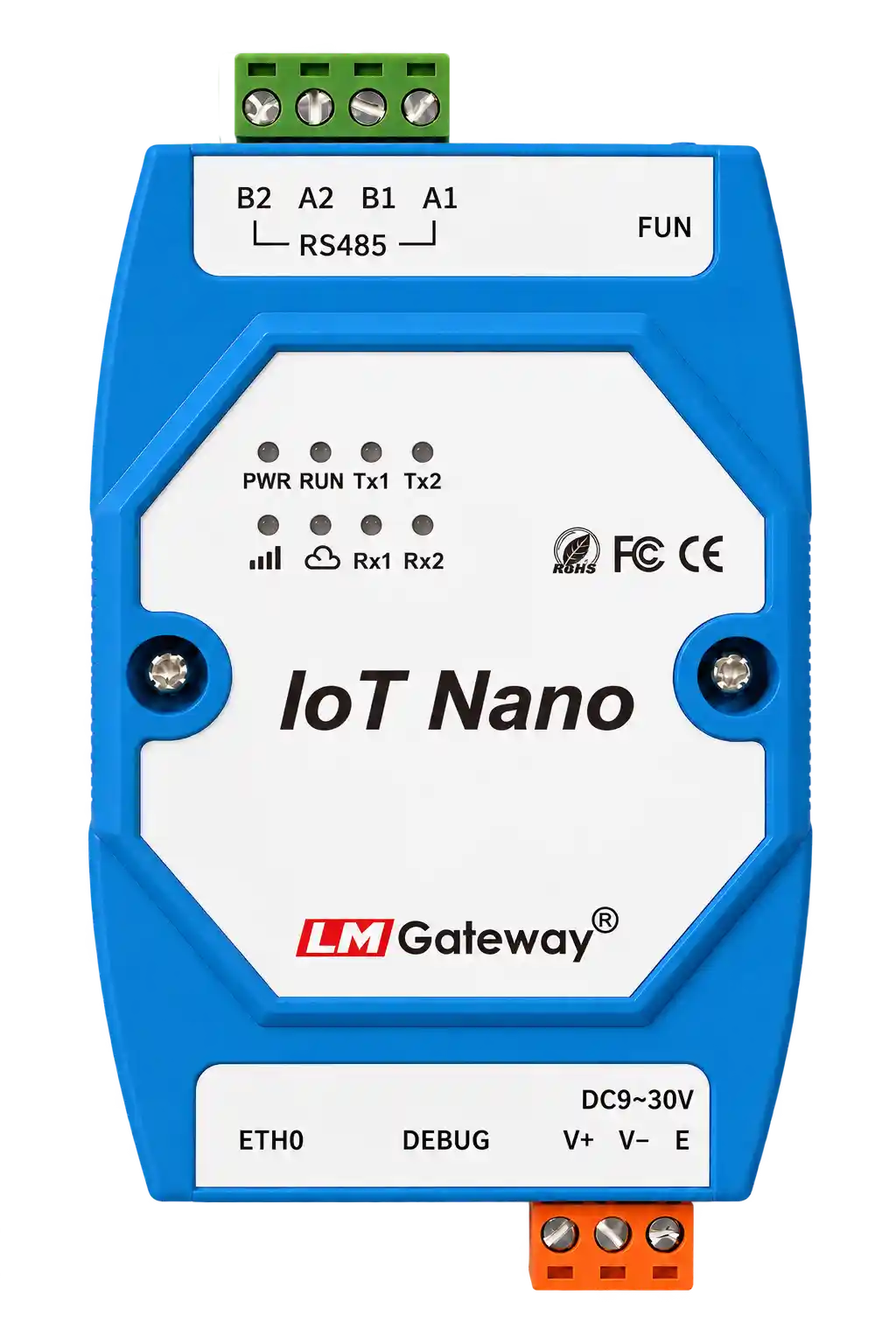
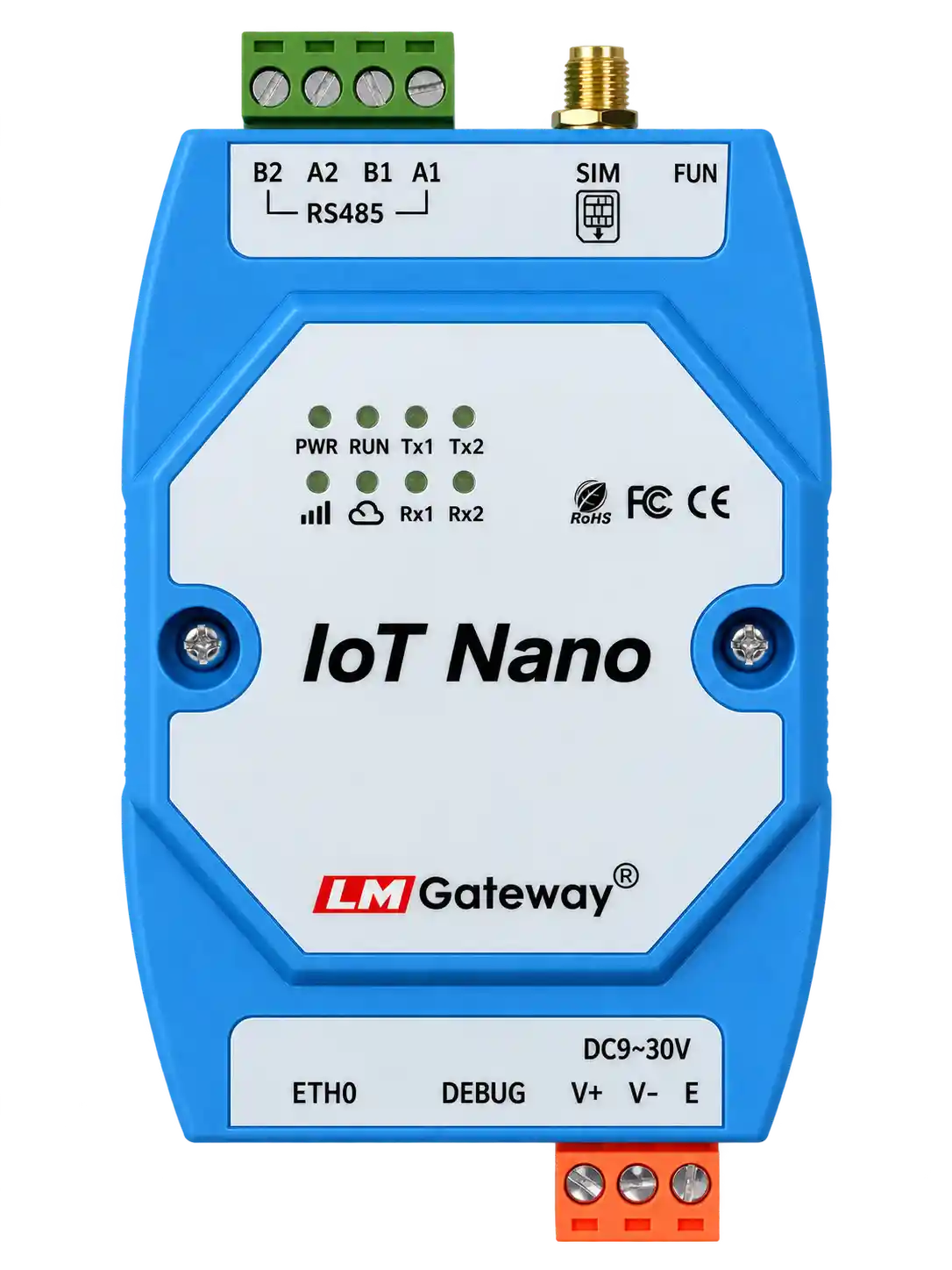
A compact gateway for platform-side use that brings Modbus RTU device data onto an MQTT cloud platform.1 – 2 RS-485 ports for acquisition, engineering unit conversion and periodic reporting, with 256 / 512 points uploaded as needed and optional 4G wireless.
Covers the 0X / 1X / 3X / 4X data areas, including coils, discrete inputs and bit fields, plus 16 / 32 / 64-bit integers and single- and double-precision floating point.
A scaling factor and offset convert raw register values into engineering units; byte order supports ABCD, DCBA, BADC and CDAB, so floating-point values are never read backwards.
Collected data is published over MQTT to the ThingsIoT platform, or to a project-specific MQTT endpoint; the platform can identify gateway model, network status and point information.
Collected data is uploaded on a cycle and large point tables are batched automatically; every record carries time information and communication quality status, so the platform does not have to stitch or timestamp data itself.
Authorised points can be written remotely from the platform; the gateway writes to the corresponding Modbus RTU device and returns the execution result, with no manual action on site.
Channel, device and point configuration can be delivered as a whole and takes effect after validation, so an invalid configuration does not affect the existing project; with run logs and remote restart, unmanned sites stay maintainable.
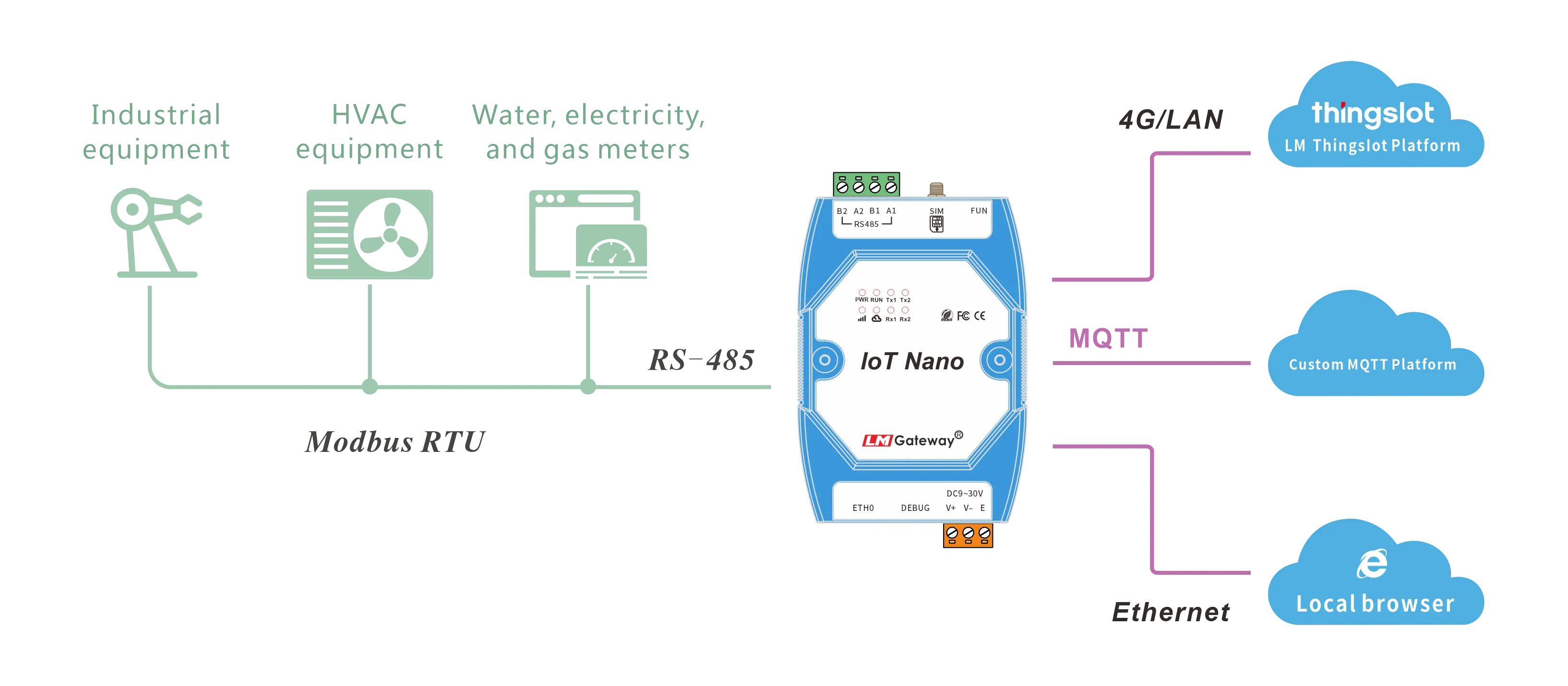
The platform identifies gateway model, network status and point information, and gateway online status is directly visible.
Collected data is uploaded on a cycle, with batching, time information and data quality status, so even large point tables upload reliably.
The platform writes a value to authorised points; the gateway writes it to the corresponding Modbus RTU device and returns the execution result.
Channel, device and point configuration is delivered as a whole and only takes effect after validation, so an invalid configuration does not affect the existing project.
View start-up and run information, including key status, exceptions and device online/offline records.
The platform triggers a gateway restart and receives the result, so no site visit is needed to power-cycle the device.