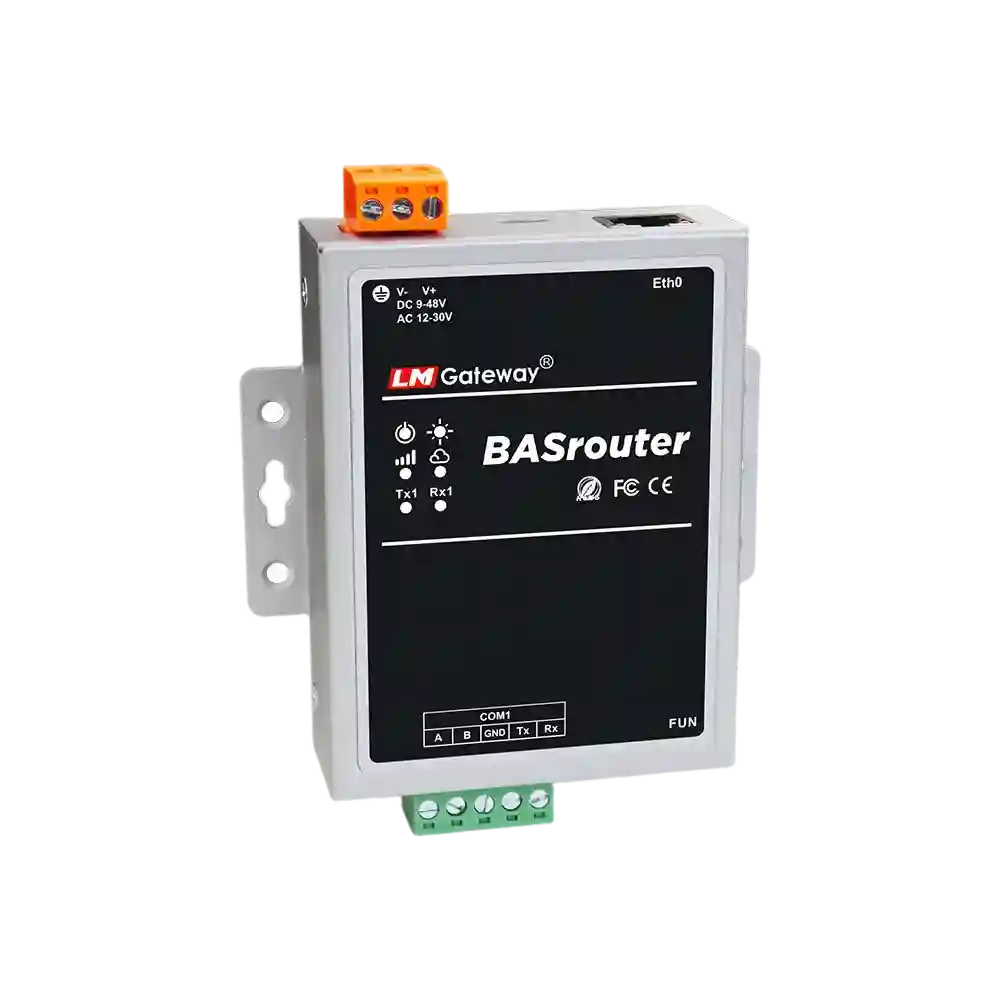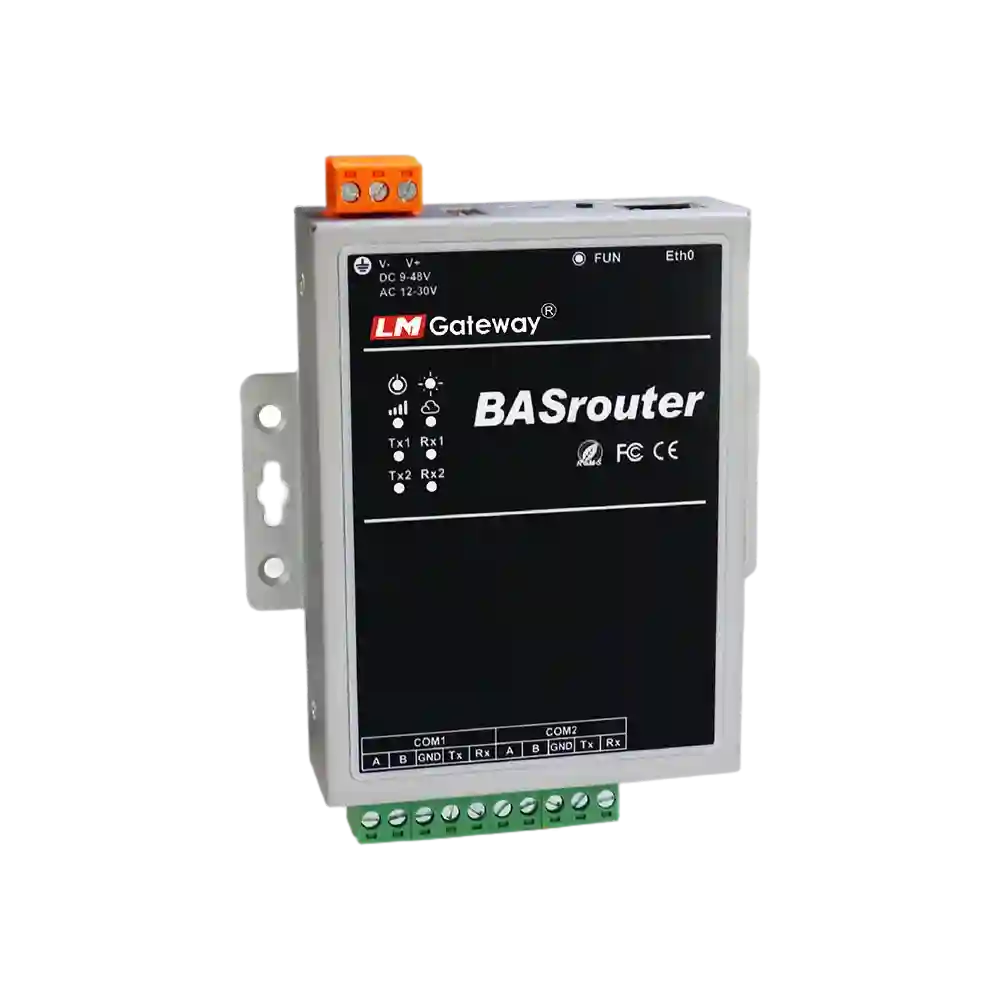

Routing
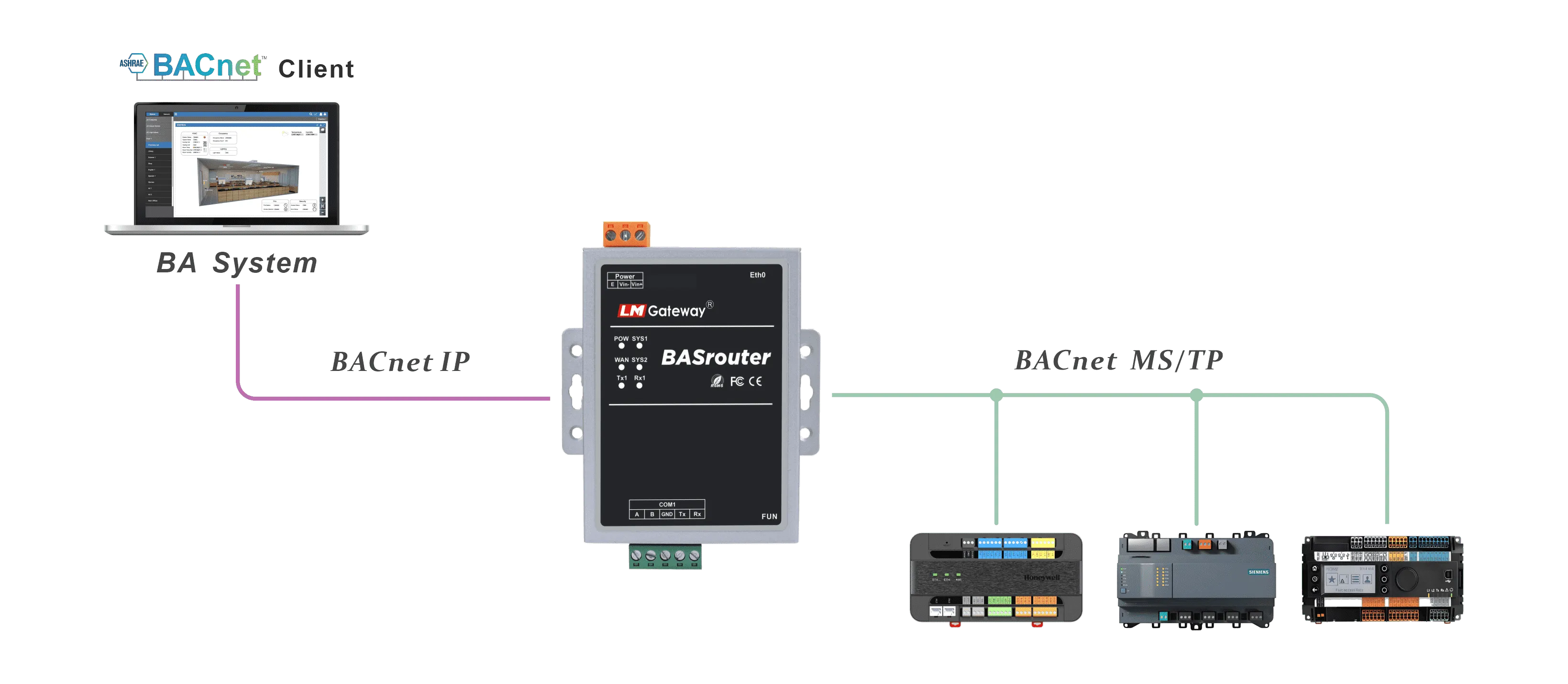
Provides independent routing between BACnet/IP and BACnet MS/TP. Routes can be discovered and the current BACnet routing table displayed, along with BACnet network traffic statistics.


Routing independently between a BACnet/IP network and a BACnet MS/TP bus, it is a common device for cross-subnet integration in building automation systems.Configuration, monitoring and diagnostics all run in the device's built-in web pages, with no host software to install.
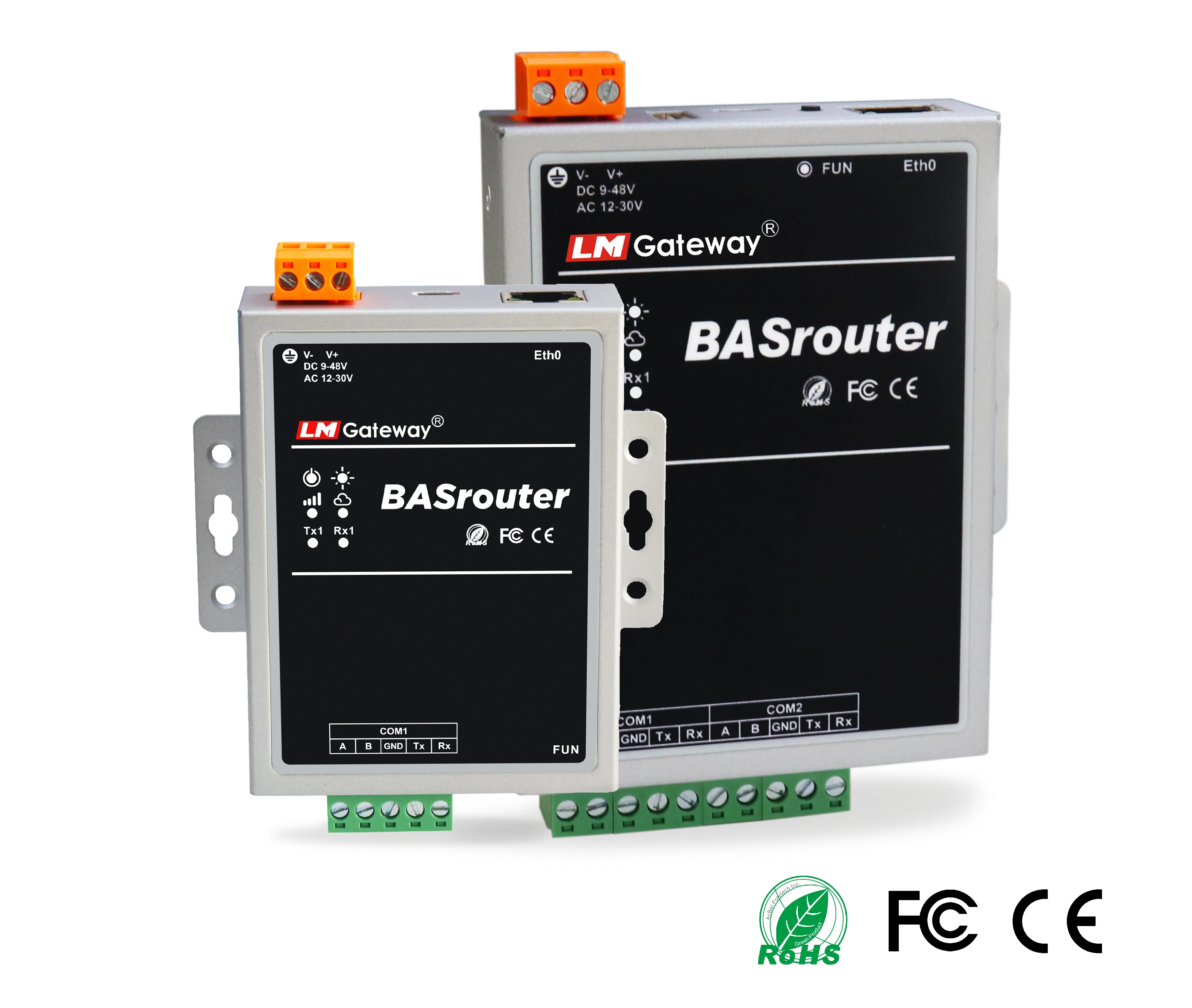
Provides independent routing between BACnet/IP and BACnet MS/TP. Routes can be discovered and the current BACnet routing table displayed, along with BACnet network traffic statistics.
Supports normal, BACnet/IP broadcast management device (BBMD) and foreign device modes. Use normal mode for a single IP subnet, BBMD for multiple IP subnets, and foreign device mode for temporary access.
Broadcast management device mode supports 128 broadcast distribution table (BDT) entries and 128 foreign device table (FDT) entries, and can push the broadcast distribution table to other broadcast management devices.
The device has a built-in web server, so operating mode, network number, UDP port and MS/TP baud rate are all set in the browser with no host software to install. The system settings page shows software version, memory and start-up time, and supports firmware upgrade, password change and save-and-restart.
10/100 Mbps Ethernet with auto-negotiation and Auto-MDIX. The IP address can be obtained automatically over DHCP, or fixed together with a default gateway, adapting to different on-site address plans.
Power and status indicators diagnose device state, and the run log records the process in detail. Serial debugging can probe the bus and record bus data without interfering with bus operation; the reset button restores IP settings and password to factory defaults.
BACnet/IP run information shows the number of packets sent and received on the network port in real time, with refresh or reset; the MS/TP side has separate statistics for judging whether telegrams still travel on the trunk.
The status page lists the online state of 128 master devices in a graphical table, so a missing station can be told apart from a broken bus.
A steady POW light means the power supply is normal, SYS1 flashing every 2 seconds means the software is running, and Tx / Rx plus the network port LEDs show bus and network activity; three beeps at power-up confirm the program has started.
Press the FUN key on the panel and one beep restores IP settings and the login password to factory defaults; a mis-configured network number or address needs no disassembly.