Lightweight HMI Platform
A new generation of lightweight HMI, combining the LVGL graphics framework with the LM-ViCtrl configuration platform.
New lightweight visualization and interaction experience
Combining HMI, device connectivity and edge data acquisition in one device. Supports LM-ViCtrl + LVGL local configuration and Web HMI solutions.
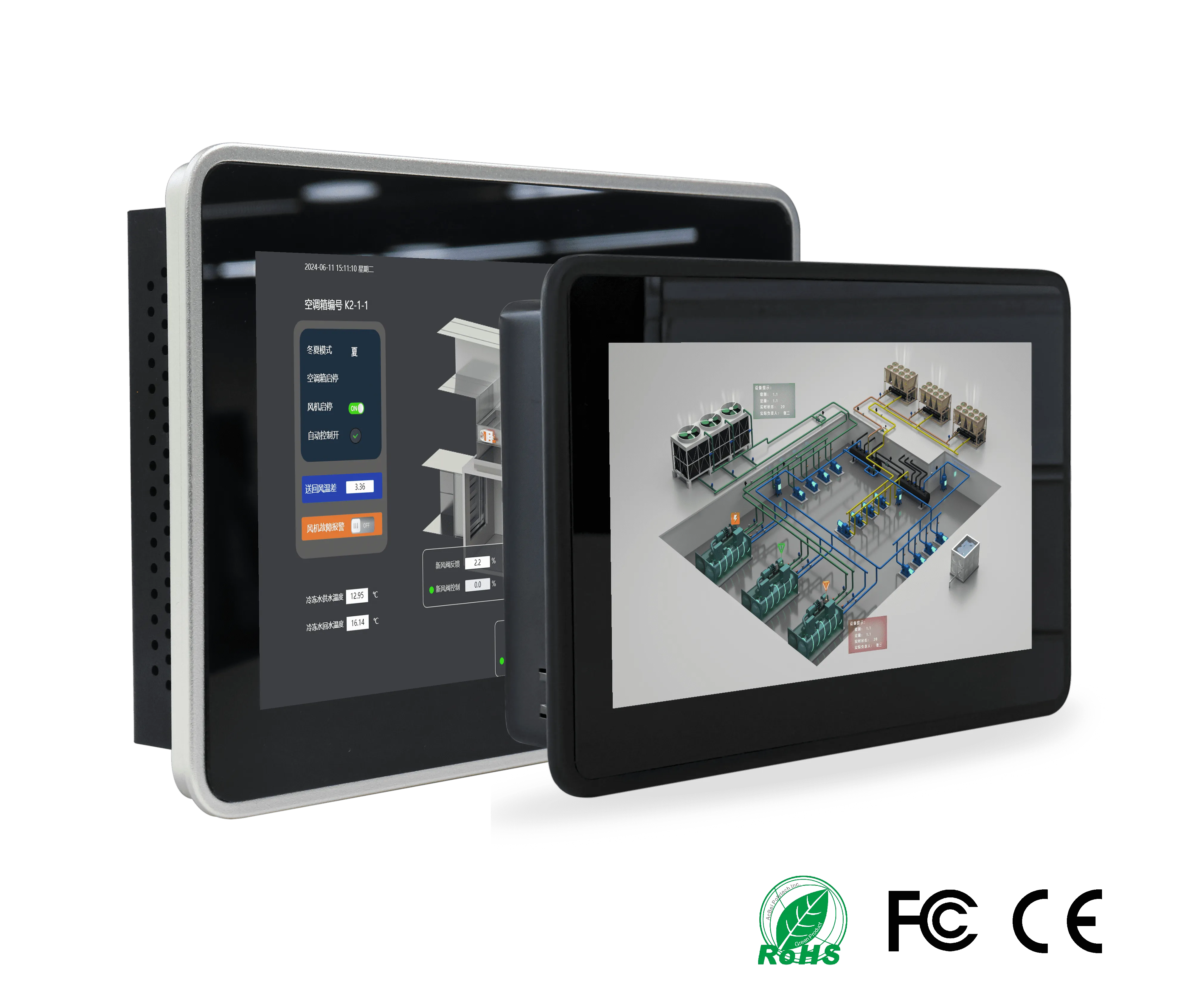
LM Gateway HMI combines human-machine interaction, multi-protocol device access, data acquisition, and protocol conversion in a single intelligent terminal.
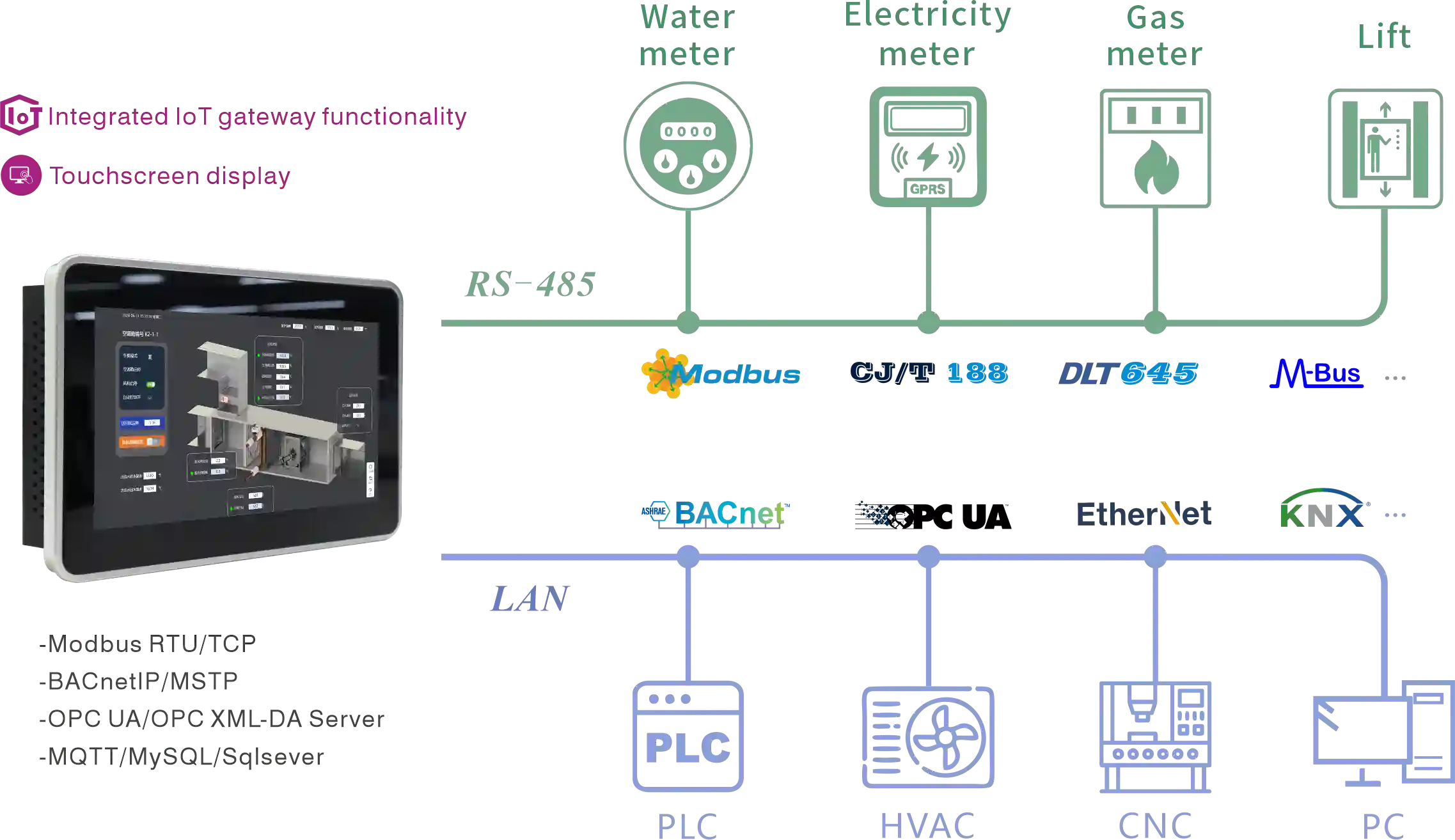
Built-in gateway capabilities allow field data to be collected, converted, and securely connected to IT systems, cloud platforms, and SCADA systems.
The dual LVGL and Web architecture gives users the flexibility to select the right interface approach for each project.
Three core capabilities help build an integrated path from field equipment to upper-level systems.
A new generation of lightweight HMI, combining the LVGL graphics framework with the LM-ViCtrl configuration platform.
Build screens, bind variables, configure alarms, trend curves and multi-language support through LM-ViCtrl.
A single device delivers local visualization, PLC data acquisition, edge processing, and data forwarding.
LVGL and Web rendering options meet different interface performance, hardware, and visualization needs.
The LVGL option uses a native local rendering engine for faster screen response, lower resource usage, and stable operation on compact embedded hardware.
Select the most suitable rendering option according to project requirements.
| Item | LVGL Rendering | Web Rendering |
|---|---|---|
| Technical approach | Native local rendering | Built-in browser runtime |
| Response behavior | Faster local interaction | Rich interactive presentation |
| Hardware requirement | Lower resource requirement | Relatively higher configuration |
| Visual experience | Clean and efficient interface | Richer and more modern interface |
| Best fit | Real-time control and cost-sensitive projects | Visualization-first and interaction-rich projects |
Tell us your protocol requirements, deployment environment, and application goals.