Cumulative Calculation
Function Overview
The core purpose of Accumulation Calculation is to calculate the total quantity over a specified period by integrating continuously varying instantaneous values.
It can be interpreted as computing the area under a curve.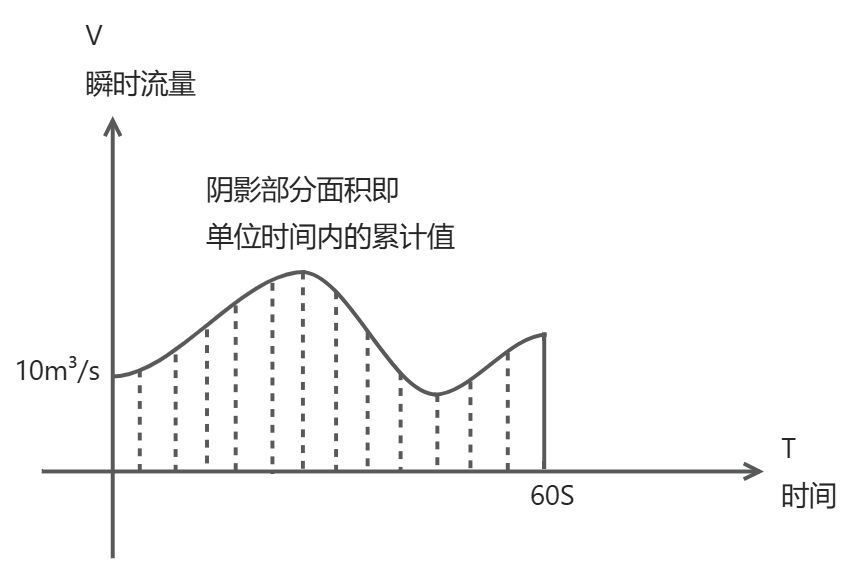
Function Configuration
The gateway's accumulation calculation function collects instantaneous value data and derives the accumulated value through calculation. 1.1. Configure collection for instantaneous value points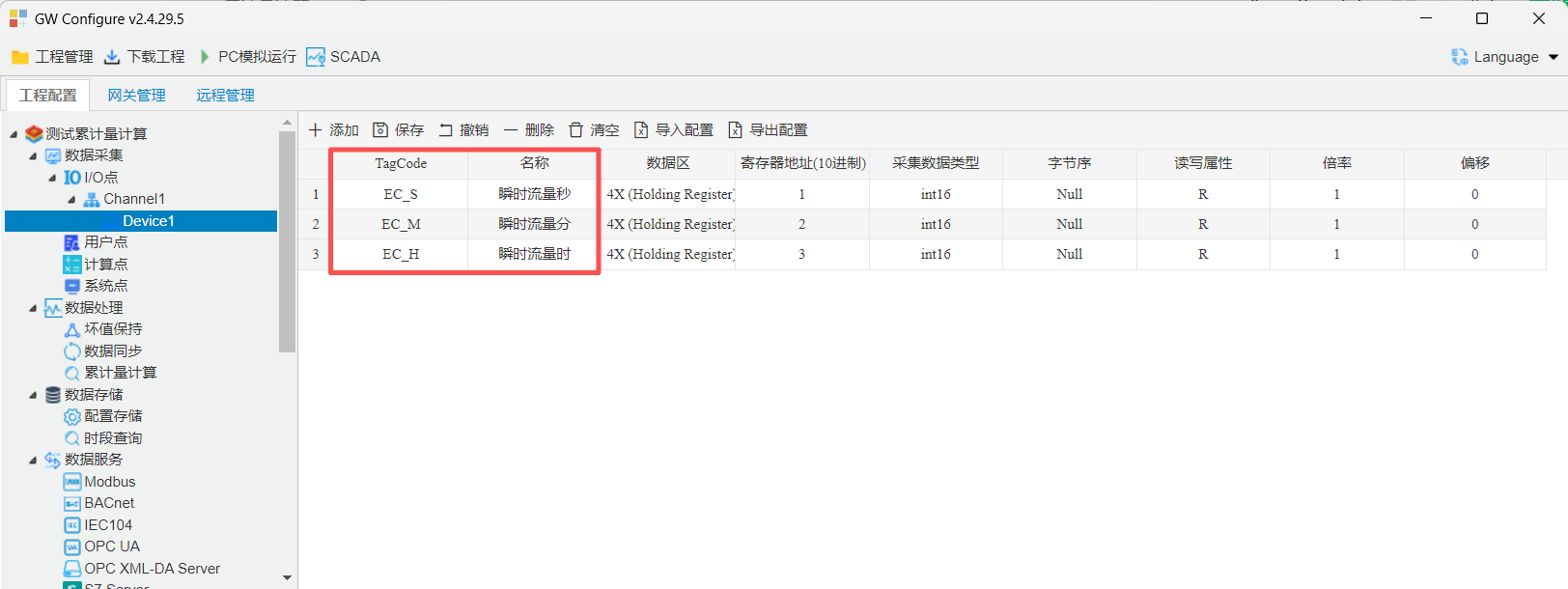
2.Configuration point(user points)
The accumulated value calculated from instantaneous quantities needs to be stored in a user point.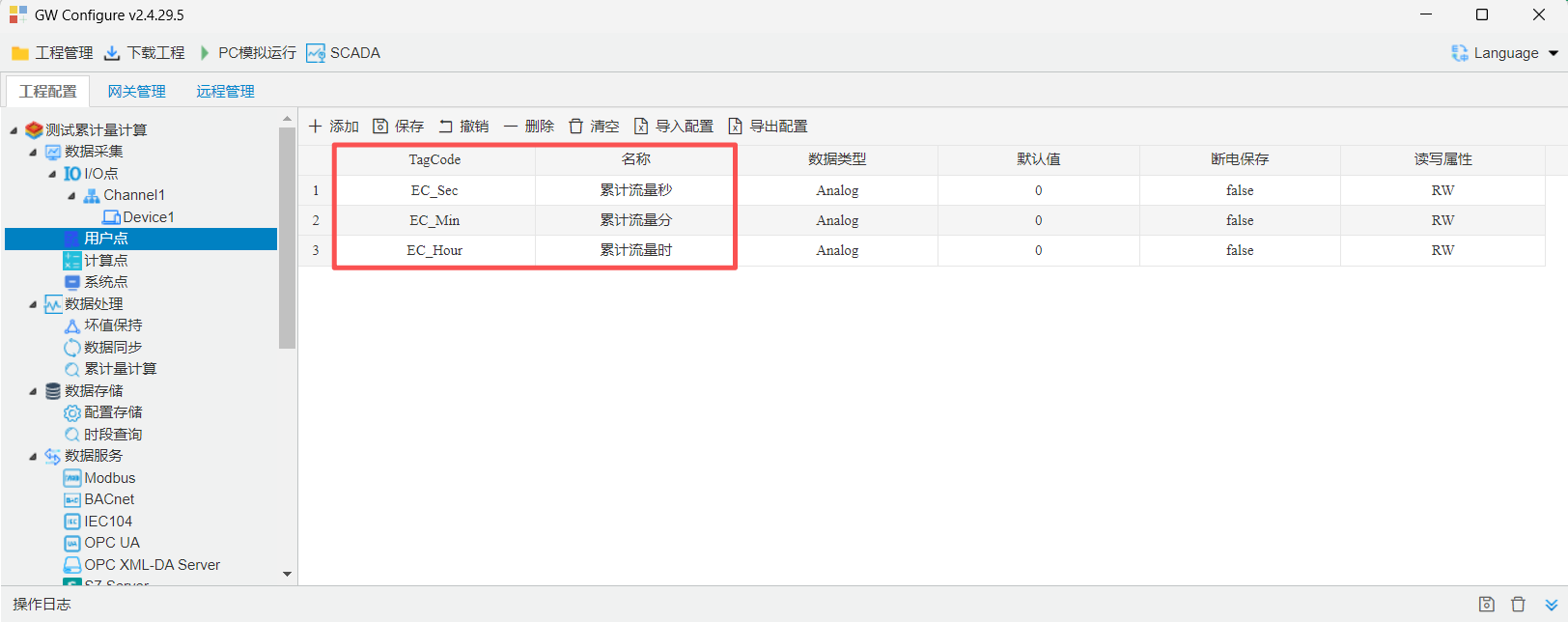
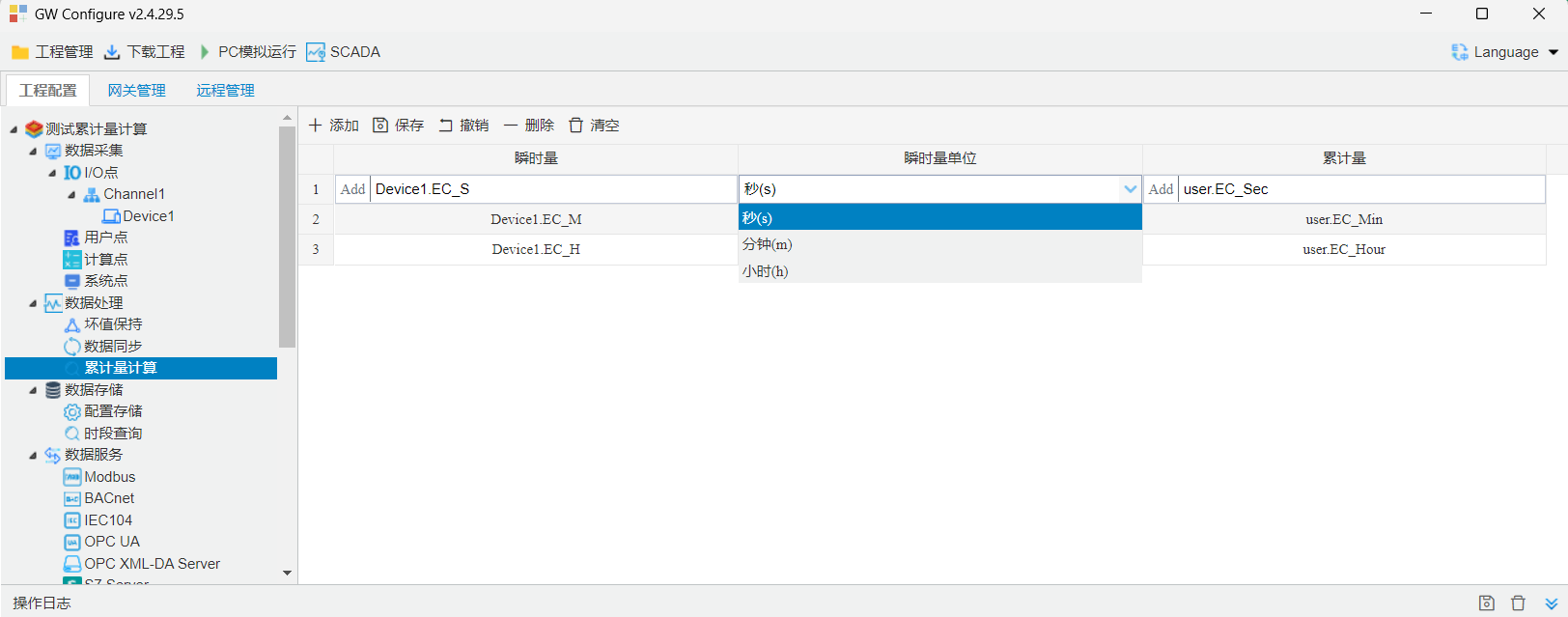
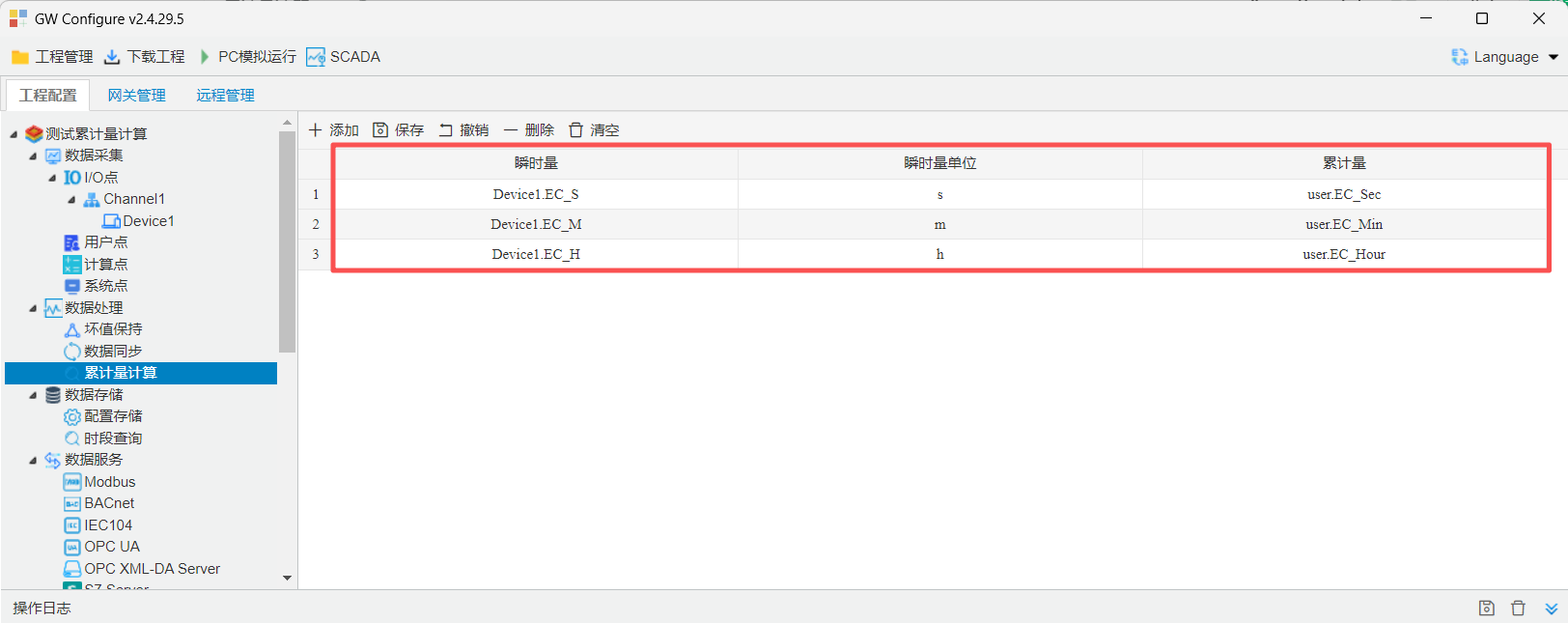
After configuration, download the project to the gateway to complete setup.
Instantaneous Value: Refers to the rate or flow value measured at a particular "instant". It is not a total quantity itself, but a concept of "speed".
- Examples: the current water flow rate in a pipeline (cubic meters/second), the present current in a power grid (amperes), the real-time power of a device (kilowatts), the current temperature of a reactor in a chemical plant (degrees Celsius).
Accumulated Value: Refers to the total quantity "accumulated" from the instantaneous value over a period of time. It is a concept of "total amount".
- Examples: the total water volume that flowed in the past hour (cubic meters), the total electrical energy consumed today (kilowatt-hours), the total output this month (tons).
**Unit of Instantaneous Value: Second / Minute / Hour **
This unit does not stand for the unit of accumulated value. Instead, it defines the time base (time density) of the instantaneous rate. It directly determines the physical meaning of instantaneous values and conversion formulas for subsequent accumulation calculation.
| Instantaneous Value Units | Physical Meaning Examples | Description |
|---|---|---|
| Per Second | Flow Rate: 5 m³/s; Power: 1.5 kW (i.e., kJ/s) | It indicates the quantity generated or consumed every second, and the data collection frequency is normally high (e.g., once per second). |
| Per Minute | Output:10 pcs/min; Speed: 60 m/min | Rate base becomes per minute. 1 piece/min = (1/60) pieces/s. |
| Per Hour | Processing Capacity: 100 tons/hour; Fuel Consumption: 5 liters/hour | Rate base becomes per hour. 1 ton/hour = (1/3600) tons/s. |
Key Understanding: Selecting different units for instantaneous values essentially means adopting different time scales to measure instantaneous rates. This unit must be taken into account during accumulation calculation to achieve correct integration results.
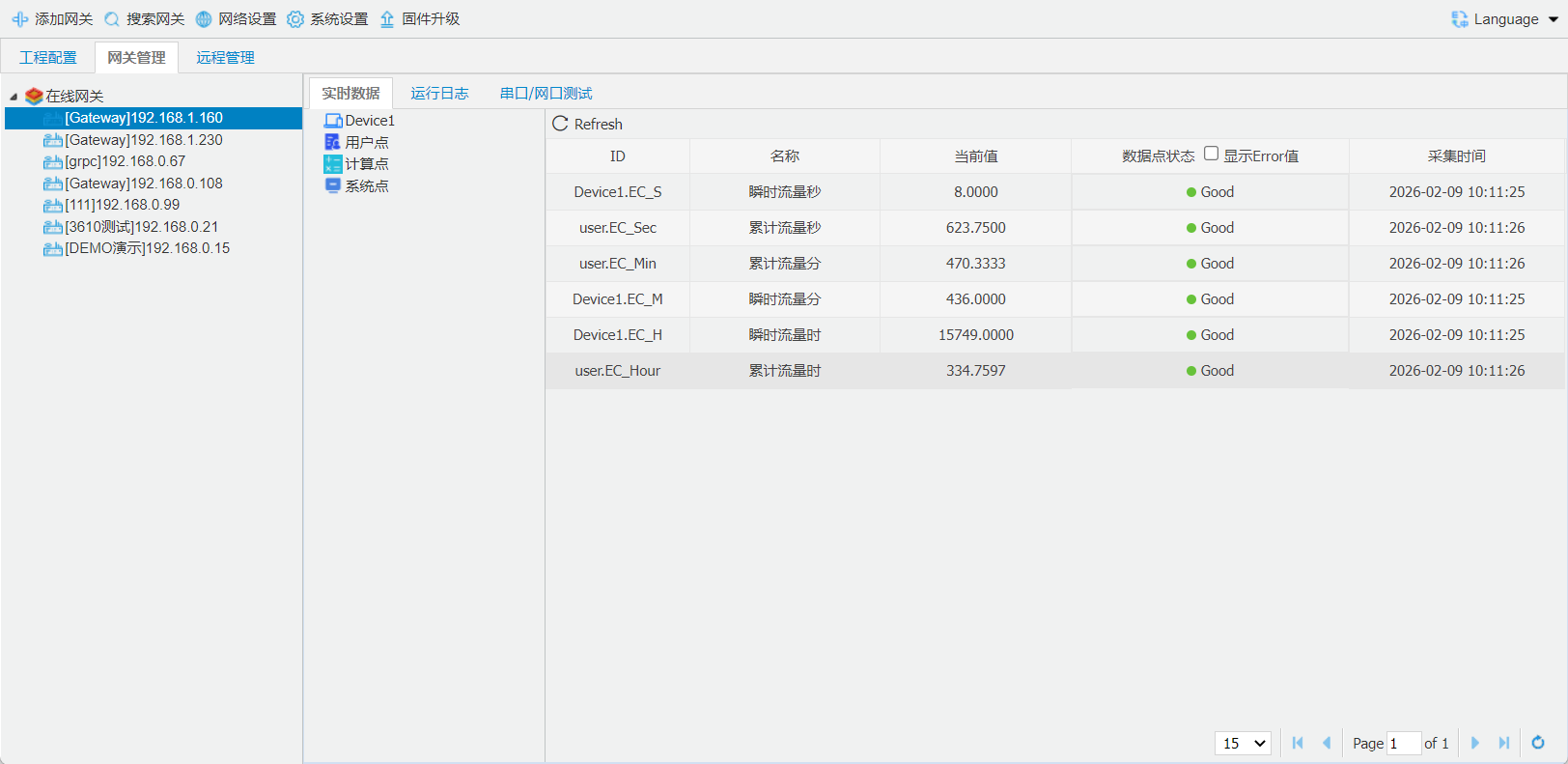
4.Gateway Real-Time Data